
Follicle Tracking Ultrasound in Lahore: Timing Ovulation the Right Way
Follicle tracking ultrasound is usually where the fertility journey really starts for a lot of couples — it’s a series of scans that map exactly when ovulation is happening, rather than guessing based on a calendar app. If you’re trying to conceive and your gynecologist has recommended this, it’s a genuinely useful test but the timing has to be right and honestly, that’s where a lot of women get confused. At Alnoor Diagnostic Centre, our radiologists handle follicular tracking regularly and getting the schedule right from day one makes a real difference to the results.
Key Takeaways
- Follicle tracking is a series of transvaginal ultrasounds done at specific points in your cycle to pinpoint ovulation
- It typically starts around day 9-10 of your cycle, with 2-4 follow-up scans afterward
- It cannot determine or influence your baby’s gender — that’s a common myth, not something ultrasound can do
- Multiple follicles growing don’t automatically mean multiple eggs will actually release
- The scan itself is quick and no more uncomfortable than a routine pelvic ultrasound
What Does Follicular Tracking Actually Mean?
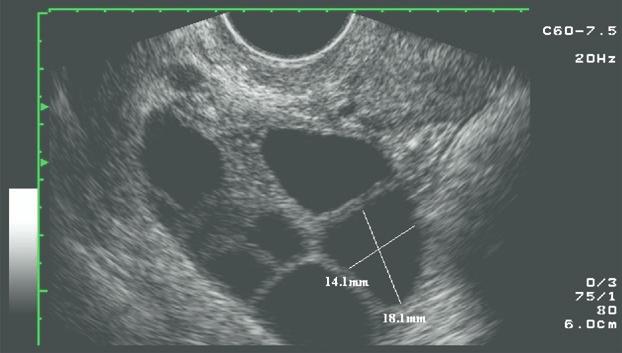
In simple terms, it’s a way of watching your ovaries in real time, month over month if needed, to see exactly when a follicle matures and releases an egg. Each ovary carries small fluid-filled sacs called follicles and one typically becomes dominant each cycle, growing larger until it ruptures — that’s ovulation. Follicular tracking follows this growth day by day through transvaginal ultrasound, so instead of guessing your fertile window from an app or a calendar, your doctor sees it happen directly on screen.
Follicle Tracking Ultrasound Protocol — How Does It Work?
The protocol isn’t a single scan — it’s a short series, spaced out over about a week to ten days depending on your cycle length. A typical schedule looks something like this:
| Scan | Approximate Cycle Day | What’s Being Checked |
| Baseline scan | Day 9-10 | Number and size of developing follicles |
| Follow-up scan 1 | Day 11-12 | Growth rate, identifying the dominant follicle |
| Follow-up scan 2 | Day 13-14 | Follicle nearing maturity (usually 18-24mm) |
| Final scan (if needed) | Around expected ovulation | Confirming rupture/ovulation has occurred |
Your gynecologist adjusts the exact days based on your typical cycle length, since not everyone ovulates on the textbook “day 14.”
Follicular Tracking Days — When Should It Start?
For a standard 28-day cycle, tracking usually begins around day 9 or day 10, right after your period ends. If your cycles run longer or shorter, your doctor will shift the starting point accordingly — someone with a 35-day cycle, for instance, would typically start tracking a bit later than someone with a 26-day cycle.
When Is the Best Time of Day to Start a Follicle Tracking Ultrasound?
There’s no strict “best hour” — morning appointments are common mainly for scheduling convenience, not because follicles behave differently by time of day. What matters far more is the cycle day, not the clock time. That said, keeping your appointments at a consistent time across the series can make it slightly easier to compare growth between scans.
Is Follicle Tracking Painful?
Not really. It’s done as a transvaginal ultrasound, the same type used for many routine gynecological scans and most women describe it as mildly uncomfortable at most — not painful. It only takes a few minutes each visit. If you’ve had a transvaginal scan before, this will feel very familiar; if you haven’t, your sonographer will walk you through exactly what to expect before starting.
Follicle Tracking for Trying to Conceive — How Does It Help?
This is really the core purpose of the test. By watching the dominant follicle grow day by day, your doctor can pinpoint your fertile window with far more accuracy than counting days alone. This timing becomes especially valuable if you’re:
- Trying to conceive naturally and want to time intercourse more precisely
- Undergoing ovulation induction with medication and need to monitor response
- Preparing for IUI (intrauterine insemination), where timing is critical
- Going through an IVF cycle, where follicle growth needs close monitoring
Does Having 4 Follicles Mean 4 Eggs?
Not necessarily, and this is a common point of confusion. Having multiple follicles visible on scan means multiple follicles are developing — it doesn’t guarantee all of them will mature and release an egg. In a natural cycle, usually just one follicle becomes dominant and actually ovulates, while the others typically stop growing and are reabsorbed. It’s really only with fertility medications specifically designed to stimulate multiple follicles (as in IVF) that several eggs are intentionally matured and retrieved together.
Can Follicular Tracking Determine or Help With Having a Male Child?
This is a commonly searched question, so it’s worth addressing directly: no, follicular tracking cannot determine or influence the baby’s gender. The scan tracks follicle growth and ovulation timing — it has nothing to do with which sperm (carrying an X or Y chromosome) ultimately fertilizes the egg, which is what actually determines a baby’s sex. If you’ve come across claims linking ovulation timing to gender selection, it’s worth knowing this isn’t something backed by reliable medical evidence and it’s not something ultrasound tracking is designed or able to predict.
What Does Follicular Tracking in Radiology Actually Involve?
From a radiology standpoint, the sonographer measures each visible follicle in two dimensions to estimate its average diameter, tracks which one is becoming dominant and also checks the endometrial lining thickness and pattern — since a healthy, properly developed lining matters for implantation too. A mature follicle, ready for ovulation, is typically in the range of 18-24mm, though your doctor interprets this alongside your specific treatment plan if you’re on fertility medication.
Where Can I Get Follicle Tracking Ultrasound Near Me in Lahore?
Consistency matters a lot with this test — ideally, the same centre and where possible the same radiologist follow you through the whole series, since comparing scan-to-scan growth is part of what makes the tracking useful. At Al Noor Diagnostic Centre, 680-A Shadman 1, our team is set up to handle the full tracking schedule, and we’re centrally located for patients across Lahore, from Gulberg to Garden Town and beyond.
Why Choose ANDC for Follicle Tracking Ultrasound in Lahore
- 40+ years of diagnostic imaging experience in Lahore
- ISO-certified imaging standards
- Consultant radiologists experienced in fertility and gynecological ultrasound
- Transvaginal ultrasound technology for accurate follicle measurement
- Consistent scheduling support across your tracking series
- Located at 680-A, Shadman 1, Lahore
Frequently Asked Questions
What does follicular tracking mean?
It’s a series of ultrasound scans that follow the growth of ovarian follicles day by day to pinpoint exactly when ovulation occurs, helping with natural conception timing or fertility treatment planning.
Does 4 follicles mean 4 eggs?
Not usually. Multiple follicles can be seen developing, but typically only one becomes dominant and releases an egg in a natural cycle, unless fertility medication is specifically used to mature several at once.
Is follicle tracking painful?
No, it’s generally not painful — just a standard transvaginal ultrasound that takes a few minutes, similar to other routine pelvic scans.
When is the best time of day to start a follicular tracking ultrasound?
Time of day doesn’t significantly matter; what’s important is starting on the correct cycle day, usually around day 9-10 for a typical 28-day cycle.
How many scans does follicle tracking usually involve?
Typically 2-4 scans across your cycle, though your doctor may adjust this based on how your follicles are developing and your specific treatment plan.
Can follicle tracking tell me if I’m ovulating normally?
Yes, this is actually one of its main purposes — it can show whether a follicle is developing and maturing properly or whether ovulation seems to be delayed or not occurring, which is valuable information for your fertility workup.
Book Your Follicle Tracking Scan
If your gynecologist has recommended follicular tracking, timing matters from the very first scan — call ahead so we can schedule your series on the right cycle days. Call 042-111-939-939 or WhatsApp +92 309 093 9939 to book at Al Noor Diagnostic Centre, 680-A Shadman 1, Lahore. You can also reach us via our contact page.